
From 15 to 16: The Murshida Khatun Selection Case and the Governance Question in Bangladesh Women's Cricket
**মূল উত্তর:** মুরশিদা খাতুন হ্যাপির অস্ট্রেলিয়া সফরের স্কোয়াডে অন্তর্ভুক্তি নির্বাচন-প্রক্রিয়ার অনিয়মের অভিযোগে বিতর্কিত। নির্বাচক কমিটির মূল ১৫ সদস্যের বাইরে গিয়ে বিসিবি নারী শাখার চেয়ারম্যান রফিকুল ইসলাম বাবু তাকে যুক্ত করেন, ফলে দল হয় ১৬। যুক্তি হিসেবে দেখানো হয় দক্ষিণ আফ্রিকা ইমার্জিং দলের বিপক্ষে একটি ৬১ রান। **মূল তথ্য:** - বাংলাদেশ নারী দলের অস্ট্রেলিয়া সফর শুরু ৯ অক্টোবর, তিন ম্যাচের ওয়ানডে সিরিজ। - মুরশিদা খাতুন হ্যাপি একজন বাঁহাতি ওপেনার, মূল ১৫ সদস্যের তালিকায় ছিলেন না। - তার একমাত্র উল্লিখিত স্কোর ৬১, এসেছে সাউথ আফ্রিকা ইমার্জিং দলের বিপক্ষে। - তিনি এশিয়া কাপ ও এশিয়ান Gamesের দলেও ছিলেন না। - রাজনৈতিক চাপের অভিযোগ করেছে বিসিবি-সংশ্লিষ্ট সূত্র; বাবু তা অস্বীকার করেছেন। **সূত্র:** ক্রিকবাজ প্রতিবেদন | Cross-checked: cricsultan.com **সম্পর্কিত প্রশ্নোত্তর:** প্রশ্ন: মুরশিদা খাতুন কে? উত্তর: মুরশিদা খাতুন হ্যাপি বাংলাদেশ নারী দলের একজন বাঁহাতি ওপেনার। প্রশ্ন: বিতর্কের মূল কারণ কী? উত্তর: নির্বাচক কমিটির মূল তালিকার বাইরে প্রশাসনিকভাবে তাকে দলে যোগ করা। প্রশ্ন: বিসিবি কী প্রতিক্রিয়া দিয়েছে? উত্তর: চেয়ারম্যান রফিকুল ইসলাম বাবু রাজনৈতিক চাপের অভিযোগ অস্বীকার করেছেন, তবে কোনো আনুষ্ঠানিক নির্বাচন-নীতিমালা এখনো প্রকাশ করেনি।
Last month, one evening, I opened my laptop in a Gulf apartment. On the screen was Bangladesh women's squad for the Australia tour—a three-match ODI series beginning October 9. I was counting names, because counting is my work, my habit, almost my religion. Fifteen. Then the sixteenth name appeared, the way a column of arithmetic swallows a late correction, or a deliberate addition. Murshida Khatun Happy. A left-handed opener. A name that was not in the selectors' original 15-member list, added from outside.
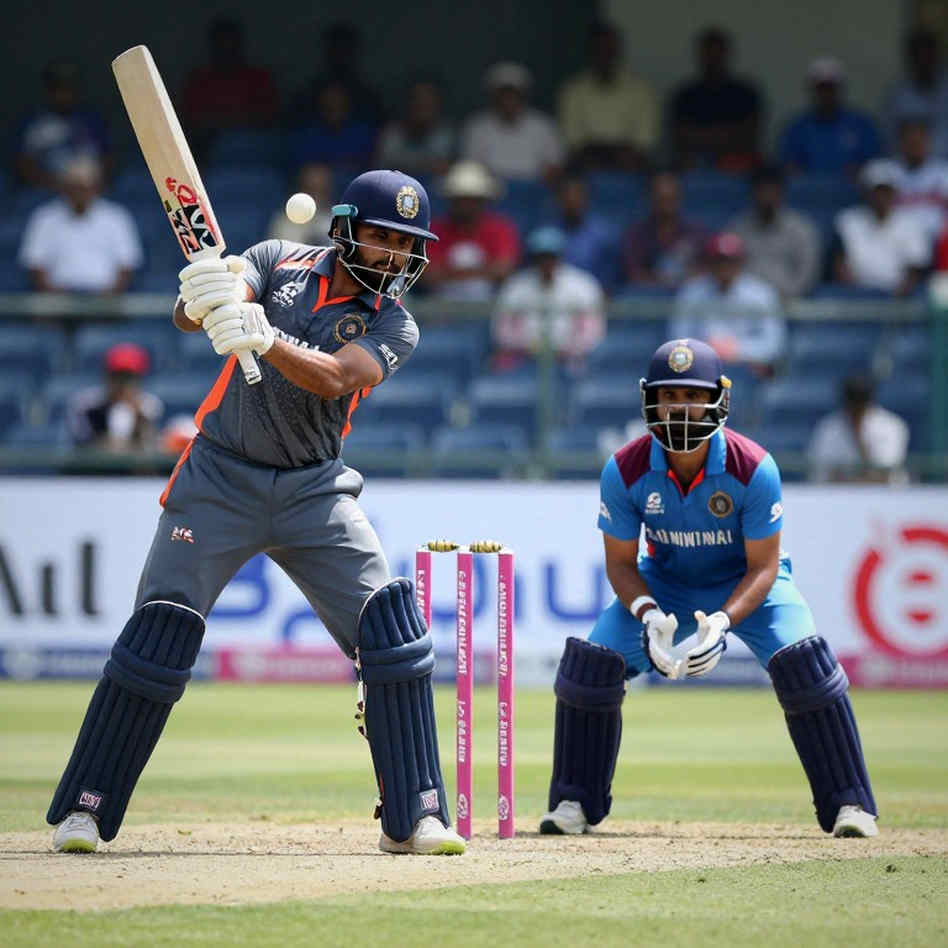
I opened the file the way I open a monastery door—quietly, then all at once. This is not a match story. It is not a scorecard story where I breathe with every over and hunt for a pulse in every refresh. It is a ledger story, where 15 was a number and 16 became a decision. And my experience says that when a number becomes a decision, the question stops being statistical. The question is power.
It matters why this story speaks so loudly. On Australian soil, this series is a contest on paper but an examination in reality. Australian pace, bounce and carry are, for a subcontinental top order, perhaps the hardest away assignment there is. In the ODI format, a left-handed opener's role is structurally large: seeing off the new ball, exploiting the powerplay's first ten overs, giving the innings a spine. In the fifty-over format, batting average and innings-building matter most of all.
Yet this piece contains no match data. No runs, no strike rate, no powerplay numbers. Because this is not a match-analysis story—it is a selection-process and integrity story. According to Cricbuzz, BCB women's wing chairman Rafiqul Islam Babu pushed to include Murshida beyond the selectors' original 15-member squad. The squad grew to 16. Sources say the 'higher-ups' insisted no deserving candidate be ignored.
Watching South Asian cricket from the Gulf means playing a game of time-zone gaps. Every refresh is a pulse; every update a delayed beat. During Russia 2026, every refresh was a pulse I had to keep. That habit taught me how loudly a single line on a squad list can speak.
I bring the spreadsheet to the party, then leave with the story—an old habit. But here the spreadsheet is nearly blank. And a blank spreadsheet speaks loudest of all. In 2026, in Singapore's S.League, I first learned that data never lies, but the absence of data often tells the truest thing.
Now to the chain of evidence. The entire episode offers a single quantitative proof—61 runs. By Babu's own account, Murshida was the only player to score a fifty on the South Africa tour, and that is the basis of her evaluation. But Babu himself concedes it came against a 'South Africa Emerging' side. An Emerging team means an 'A'-level second-string side, where the standard of performance is materially lower than full international cricket. The conversion rate from emerging level to senior level is historically low; that is a documented reality.
Selecting an ODI squad on the strength of one innings is not a statistically valid basis. A single number is not an average, not a trend, not a strike rate, not a situational split. Babu's argument is really an argument about fairness, not output: 'she was dropped because she failed once in her career,' and 'many others fail and are not dropped.' That is the arithmetic of emotion, not of hard currency.
Then comes the most important fact—Murshida was also absent from the Asia Cup and Asian Games squads. Had she been obviously in form, her name would have been in the more recent, higher-profile squads. It was not. That suggests this is probably not a selectorial consensus—but an administrative override.
And there is a precedent, which matters most to me. In the men's team, former BCB chief Nazmul Hasan was accused of instructing selectors—a precedent of direct interference. This is not an isolated incident; it is a structural weakness. Babu's defence—'the Asia Cup and Asian Games squads predated my tenure'—is logically incomplete. It explains why she was previously omitted, but it does not establish that she now merits selection ahead of the selectors' original 15.
One more dimension cannot be skipped. This tour is fundamentally developmental for Bangladesh—victory against a side like Australia is unlikely, so the real value is experience. Yet a developmental tour is precisely where transparent, merit-based selection matters most, because it is where a young player learns how hard the international standard truly is. If that very space is captured by administrative influence, the lesson itself is distorted.
And one market reality must be remembered. In women's cricket, Bangladeshi players have no lucrative alternative league like the WPL. A national-team slot is their primary career and earning pathway. So a single slot carries disproportionate value—and the incentive to lobby, to seek recommendation, to build an 'arrangement' around that scarce slot intensifies.
Now to the contrarian part, where I always turn a finger of doubt on myself. Correlation is not causation. Babu's account (performance) and the BCB-linked sources' account (political pressure) are both single-source claims. Neither is proven. Babu denied political pressure, but a self-interested single statement does not settle the allegation.
The real point runs deeper. The 'performance versus politics' binary is itself wrong. The core problem is the absence of a published, written selection policy. When the policy is unwritten, every decision becomes a matter of interpretation—some call it merit, some call it recommendation. In a system where the rule is not written in black and white, the ink of allegation always spreads.
And one warning from my own data experience. On this tour, Bangladesh's results will likely be adverse. Then the story may turn—from a selection scandal to a 'scapegoated player.' Placing an unproven opener in the harshest conditions and pinning the blame for her failure on her neck is accountability aimed at the wrong address. The blame belongs to the administration, not the player. In 2026, the empty stadium taught me that silence has its own expected goals—here, the silence belongs to the administration.
So what comes next? Three signals I will track. First, the Australian scorecard—if Murshida fails, a 'scapegoat' framing; if she performs, a 'vindication' framing. Second, BCB's response—if a transparent selection policy emerges, it could become a positive precedent for emerging women's cricket. Third, the signal sent to young players: 'perform' or 'build connections'.
The ledger said 15; it became 16. But that is not the real number. The real number is how many young girls will look at Murshida and learn that rules can be bent by hand—and how many will learn that the rule never existed at all.