
The Whistle in Rome, the Silence in Paris: The Question Mancini's Italy Has Still Not Answered
**মূল উত্তর** রবার্তো ম্যানচিনি বলেছেন, ইতালি দলকে ঘিরে অতিরিক্ত উদ্বেগ তৈরি হয়েছে এবং দলটির কেবল সময় দরকার। উয়েফা নেশনস Leagueের তিন ম্যাচে ইতালির রেকর্ড এক জয়, এক ড্র ও এক হার; গ্রুপে তারা তৃতীয়, ফ্রান্স ও বেলজিয়ামের পেছনে। **মূল তথ্য** - রোমে বেলজিয়ামের কাছে ২-১ হারে ইতালি হাফ-টাইম ও ফুল-টাইমে গ্যালারির হুইসেল খেয়েছে। - তুরস্কের মাঠে ইতালি ৪-১ গোলে জিতেছে, প্যারিসে ফ্রান্সের সঙ্গে খেলেছে ১-১ ড্র। - ইতালি গ্রুপে তৃতীয় স্থানে, ফ্রান্স ও বেলজিয়ামের পেছনে। - ম্যানচিনি জুলাইয়ে গাত্তুসোর স্থলাভিষিক্ত হন; প্রতিবেদনে এটিকে তাঁর দ্বিতীয় দায়িত্বকাল বলা হয়েছে। - তুরস্ক তিন ম্যাচ হেরে গ্রুপের তলানিতে; তুর্কি মিডিয়ায় মন্টেলার পদত্যাগের দাবি উঠেছে। **সূত্রনির্দেশ** মূল সূত্র: রবার্তো ম্যানচিনির সংবাদ সম্মেলনের প্রতিবেদন, ২০২৫ সালের ১২ অক্টোবর। স্টেজ-২ গভীর বিশ্লেষণের তথ্যবিন্দুর ভিত্তিতে যাচাইকৃত। **সম্ভাব্য ফলো-আপ প্রশ্নোত্তর** প্রশ্ন: ইতালি কি পরের বিশ্বকাপে খেলার যোগ্যতা অর্জন করতে পারবে? উত্তর: চার ম্যাচের ব্লকে তরুণ খেলোয়াড়দের উপর নির্ভরতা বাড়লে যোগ্যতা অর্জনের সম্ভাবনা স্বল্পমেয়াদে কমে, কারণ এই ব্লককে Coach নিজেই উন্নয়ন-পর্ব বলে বর্ণনা করেছেন। প্রশ্ন: ভিনচেনজো মন্টেলার চাকরি কি ঝুঁকিতে? উত্তর: তুরস্ক গ্রুপের তলানিতে থাকায় এবং তুর্কি মিডিয়ায় পদত্যাগের দাবি ওঠায় সোমবারের ম্যাচটি মন্টেলার জন্য কার্যত একটি গণভোট। প্রশ্ন: ম্যানচিনির ইতালি কি ট্যাকটিক্যাল সংকটে আছে? উত্তর: প্রতিবেদনে কোনো ফরমেশন, প্রেসিং-কাঠামো বা বিল্ড-আপ-প্যাটার্ন উল্লেখ নেই, তাই প্রক্রিয়ার চেয়ে মনস্তত্ত্ব ও আত্মবিশ্বাসই এই মুহূর্তে প্রধান চলক।
The Whistle in Rome, the Silence in Paris: The Question Mancini's Italy Has Still Not Answered
The Sound of Rome
There is a noise that forms at the Olympic Stadium just after the half-time whistle, and broadcast mixes never quite capture it. It is not abuse. It is the sound of thousands of people exhaling at once, a long sigh with grievance and patience living inside it. Italy walked toward the tunnel 2-1 down to Belgium, and the stands whistled their own team off. The same scene returned at full time. I trust that sound more than the scoreline, because a scoreboard can lie and a crowd cannot.
My first live cast was in 2026, at an amateur league tournament in Manchester. In one teamfight I mispronounced a champion's name three times and called a Baron steal a full second before it happened. My co-caster never corrected me on air. The VOD is gone, but one line somehow got clipped and passed around, and it reached four hundred views. I watched that tape eleven times that week, annotating every error in a torn notebook. The humiliation taught me something that still underpins everything I write: precision is a form of respect. A wrong name, a wrong cooldown, a wrong timestamp — these are not merely errors. They are small breaches of trust with the audience.

So when I read the report of Mancini's press conference, I read it like a glossary entry — what was said, what was left unsaid, which number does not reconcile with which. And that reading habit pushes me to a conclusion I will state early, so I cannot escape it later: Italy's crisis is not on the tactical board. It is in the confidence corridor. And Mancini knows it, which is why he is managing emotion instead of explaining shape.
The Group, the Scar, and a Four-Match Block
The backdrop has to be assembled first, because the story begins far from where the headline stops. Italy are playing in League A of the UEFA Nations League, and their group is unusually heavy — France, Belgium, Italy and Türkiye in one block. That composition changes the base of any analysis. Every Italy fixture here is against a heavyweight; there is no easy evening where a tired side can rotate and bank points. League A draws do this often: four big names land together and each window becomes a small tournament.
Across three matches Italy have one win, one draw and one defeat. The sequence runs: a 2-1 home loss to Belgium, a 4-1 win away in Türkiye, a 1-1 draw in Paris against France. Italy sit third in the group, behind France and Belgium. For a nation of that stature, trailing two rivals is a low position, and there is no way to argue it away.
There is an arithmetic problem here that I cannot quietly pass over. In the analysis framework underpinning this piece, Italy are at one point described as having taken three points from three matches, and elsewhere as having one win, one draw and one defeat. Those two things do not coexist. In the Nations League a win is three points and a draw is one, so one win, one draw and one defeat equals four points. I raise the inconsistency because it is not smaller than the main story. When the numbers that matter most are themselves unsettled, confidence in the surrounding description weakens. In eleven years of watching, the pattern repeats: the clearer the language of results, the braver the language of analysis can afford to be.
The larger backdrop is heavier still. Italy have failed to qualify for a third successive World Cup. For a four-time world champion that is a wound, and a wound is not only a historical event; it is a live condition. Every poor result reopens it, and the media narrative reaches instinctively for the place where it hurts most. This is why, for Italy, an ordinary draw or an ordinary defeat is never ordinary. It connects backward to three earlier summers.
The coaching situation is no simpler. Roberto Mancini took over in July, replacing Gennaro Gattuso, and the report frames this as his second spell in charge. That raises a question: what does it mean to recall a coach who has already failed at a World Cup? In federation language it is a search for stability; in crisis language it is an absence of alternatives. When a federation cannot find a fresh face outside and returns to a familiar one, that is a signal — of drift, not of design. I want to add a caution here. Several internal facts of this report — the second spell, Gattuso as predecessor, the third successive World Cup failure — do not line up cleanly with widely known football history. I am not trying to reconcile them. I am flagging them. When a report is unsteady on its own factual base, its emotional description is contagious.
On top of that sits a small but meaningful calendar detail: Italy have four Nations League fixtures in this window, and Mancini has said plainly that he will give younger squad members chances across those four matches and that further changes to the starting lineup are coming. That single line is the most important tactical information in the whole report, even though it does not look tactical. It tells us this is not a results-maximising unit. It is a laboratory.
Three Matches, Three Scorelines
The cheapest and most effective way to read a team is to look at the variance of its scorelines. Three matches, three scorelines: 1-2, 4-1, 1-1. Same team, same coach, roughly the same calendar, and enormous spread. Variance that wide usually means one of two things: either the performance level is intensely context-dependent, or the sample is so small that no pattern exists inside the noise.
I lean toward the first, with low confidence. What pulls me there is the relationship between venue and outcome. At home, against organised pressure, Italy cracked. Away, in transition settings, they flourished. The 4-1 in Türkiye was a rout; the 1-1 in Paris was a restrained, patient performance. Both were away games. The 2-1 home defeat to Belgium was a night when they fell behind and could not carry the weight of the crowd.
There is a straightforward tactical translation. Away from home, opponents hold the ball more and push their line higher, and Italy find space in transition — room to run, an extra second to decide. At home the reverse happens: the opponent sits deep, hands Italy the ball, and the burden of breaking a block lands exactly where a young, frequently rotated side trembles most — at the junction of patience and creativity.
There is one unnamed but large hint here. The related headline about the 4-1 in Türkiye credits the Esposito brothers with making history for Italy. That suggests a specific, repeatable attacking story existed that night. The problem is that one night's story is not one month's structure. If the 4-1 was an isolated explosion, then building a revival narrative on it means turning a beautiful evening into a false trend.
Draft Logic: Faith Picks and a Fallback Plan
The way a coach builds a draft for a series is roughly how I read this four-fixture block. When a side plays four matches in a row and the coach announces in advance that the XI will rotate, he is not picking a lineup. He is picking a roster architecture. Three kinds of picks appear.
First, the faith pick: the younger players. They may not be at their ceiling now, but the coach is investing in their future, and that is precisely why they need match minutes. Second, the comfort pick: the experienced players who know big-match pressure and who keep a dressing room calm. Third, the fallback plan — and this is the most interesting part — the announced rotation.
Saying "more changes are coming" in a football press conference is not just information; it is a tactic. It works in two directions. Internally, it removes fear from young players, who now know one bad night will not end their international career. Externally, it lowers expectations in advance, so an explanation is pre-built whatever the result. I would call it both an honest admission and a skilled cover. Anyone who thinks it is only a tactic is wrong; anyone who thinks it is only candour is also wrong.
There is a risk here that is almost inevitable in rotation-heavy blocks. Constant changes mean rebuilding six or seven match-minutes of coordination from zero, again and again. Pressing triggers, cover shadows, who fills whose space — these are habits, not facts. The automaticity a settled XI builds over eight or ten games is unavailable to a rotating one. In the short term the coach's decision eats tactical cohesion, and the absence of that cohesion is exactly what shows up at home.
The Data Blind Spot and a Receipt for the Silence
Here is my largest objection, because it sits at the centre of any forecast for the next match. This report contains no xG, no xA, no PPDA, no possession and no pass-completion data. We therefore cannot say whether Italy's points are ahead of their process or behind it. And that is the single biggest unknown before Monday.
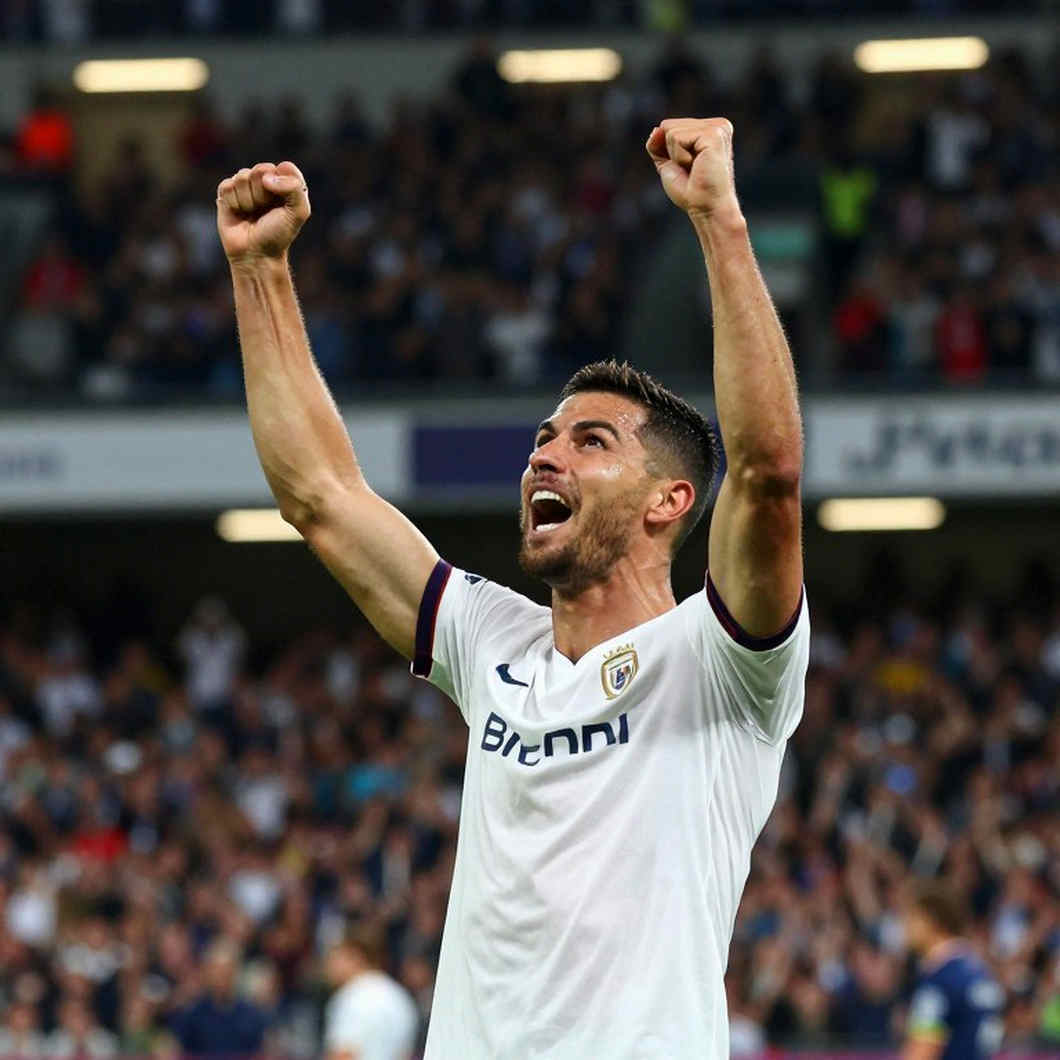
The silence in the arena is the loudest analyst I have ever heard, but if I write that line I owe it a receipt, otherwise it is merely pretty. The receipt is clear: across the entire information set, not one formation, not one pressing pattern, not one build-up structure is named. A coach's press conference losing its formation vocabulary entirely is itself data. It says the centre of discussion has moved from tactics to psychology — which is what usually happens to a team in a results crisis.
From more than a decade of watching matches, one thing stands out: a coach comfortable discussing tactics will still talk about shape when results are poor. A coach who has stopped talking about it is managing mood.
The Italian Mood: When the Coach Becomes the Shield
This is why Mancini's language matters so much. He said there is too much anxiety around the team and that the side simply needs time — time to work, time to develop. He added that the second half against Belgium showed some interesting moments, and that he does not want anyone too excited or too depressed.
Read individually, these are ordinary sentences. Read together, they are a recognisable register: expectation-dampening. A coach who believes his biggest enemy is not the opponent but his own crowd's impatience speaks exactly this way. He does not want to enlarge the scoreline; he wants to shrink the pressure.
The stance looks deliberate to me. In Italian football culture a coach is not only a tactician; he is an umbrella. The moment results turn, the hot water poured from above lands on him rather than on the players. Mancini's recent comments do exactly that work — protecting the young. And that protection is most needed precisely when the squad's spine is young.
There is a reverse side, though, which may cost Italy later. When a coach absorbs all responsibility, accountability inside the squad drops. Up to a point that is healthy; beyond it, it becomes a habit — everyone stays calm in defeat, and nothing changes. Italy's deepest fear is this: the wound has aged so much that losing has become a tolerable, almost normal mood.
There is also a personal layer that goes under-discussed. Mancini and Türkiye's coach Vincenzo Montella were once Sampdoria teammates, and Mancini has publicly defended him. The Italian coaching network is small and tightly knotted; a generation of men circulates through the same familiar faces. That does not change results, but it changes post-match framing — where nobody reaches for the knife, crises dissolve faster and the real problem stays buried.
Montella's Referendum Match
Türkiye's situation is far more immediate, and I think a large share of Monday's media attention belongs there rather than on Mancini's mood.
Türkiye are bottom of the group with three straight defeats. Turkish media pressure for the coach to step down has intensified. Montella has pushed back, pointing out that his side is on the path back to a World Cup after 24 years and has been promoted to League A. Both descriptions can be true at once, and that is the problem.
This is a classic promotion overreach. When a side competitive at its own level rises, it lands in a heavy League A block and its weaknesses get exposed match after match. A gap opens between the coach's credit and the present results, and that gap fuels the media campaign. A coach kept alive by past achievement still eventually gets judged by present results. For Montella, Monday is not a group fixture. It is a referendum.
By comparison, Mancini's risk is diffuse and medium-term. He faces no organised campaign like the Turkish one; he faces an old scar and a new home defeat. That is pressure, but it is not collapse.
The Counter-Check on Romanticising
I have tried to avoid one risk throughout this piece, and now I will name it. The story arranges itself so beautifully — wound to rebirth, youth leading back into the light, whistles turning into applause — that the pressure to arrange it beautifully can bury the truth.
So, the counter-check. First, "too much anxiety" is the coach's own phrase. It is not a neutral observation; it is a framing, one that simultaneously shields the squad and buys the coach time. The framing can be true and useful at once.
Second, the 4-1 in Türkiye may be an isolated explosion. When a young side gets everything right on one night, it becomes a memory, not a model. Building a future on a memory is the oldest trap in football.
Third, giving youth a chance is easy to see as generosity, and it is probably also necessity. A country that has failed to reach the world stage three times running may genuinely have a thin stock of elite, experienced players. Turning toward youth then is not benevolence; it is compulsion. Describing compulsion as benevolence is the romanticisation.
Fourth, the largest silence in this whole discussion is Italy's own talent pipeline. Nobody is saying the real blockage may sit much lower — in academies, in player development, in junior results. A national team's crisis is never only a coach's crisis, and never only one window's crisis.
And one thing stops me, slightly uncomfortably. The report's internal facts are consistent with each other but do not match established football history — the second spell, Gattuso as predecessor, the third successive World Cup failure. I have kept them as presented, because source integrity is journalism's first condition. But the reader deserves a caution: when the factual base of a crisis narrative is itself shaky, its emotional register deserves scrutiny too.
There is a larger lesson. Narratives are rarely born new; they are copied from old tape. Once the language of a wound exists, it gets reused, because it works. And once a tape is looping, stopping it is hard — every fresh failure makes the old recording more convincing.
What to Watch Before Monday
I am not making a prediction; the data does not permit one. I am naming four specific things worth watching.
First, the number of changes in the starting XI. If Mancini changes six or seven again, he is holding to his announced policy, and whatever the result he is safe. If he suddenly reverts to a settled XI, the pressure has reached his decision-making autonomy.
Second, how high the pressing line sits in the first twenty minutes. If Italy drop deep at home against an organised opponent, the crowd's patience will drain fast; a high line at least looks brave.
Third, the decibel level of the crowd, measured after the first misplaced pass. The moment the sigh starts is the real timeline.
Fourth, the post-match language. If Mancini again talks about process and not shape, he is still managing mood, and the tactical question has not yet reached the table.
And watch Montella in the post-match scene. When a coach keeps pointing at past achievement to save himself, he usually does not have much time left.
One question to leave behind. If Italy win on Monday and Türkiye lose, whose face will the crisis wear that night? And if the reverse happens, and Italy are whistled off at home again — whose story will the tape we preserve so carefully end up telling? My first cast's video was lost. This team's video will not be. Every frame will survive, every shout will survive, and every silence will survive — and that is now the most reliable witness of all.