
HomeFootballWhy Kevin Diks Gave Away the Penalty: Indonesia's Leadership, Diaspora Model, and an Unfinished Story
Why Kevin Diks Gave Away the Penalty: Indonesia's Leadership, Diaspora Model, and an Unfinished Story
**মূল উত্তর:** ২৫ সেপ্টেম্বর ২০২৬-এ জাকার্তার গেলোরা বুং কার্নো Stadiumে ইন্দোনেশিয়া ২-০ সিঙ্গাপুরকে হারায়। কেভিন ডিকস নিজে পেনাল্টি নেওয়ার সুযোগ থাকলেও ওলে রোমেনিকে বল দেন। রোমেনির মতে, ডিকস দল-প্রথম নেতৃত্ব দেখিয়েছেন এবং দলে অনেক ভালো পেনাল্টি-টেকার আছে। **মূল ঘটনা:** - ইন্দোনেশিয়া ২-০ সিঙ্গাপুর, গ্রুপ এ ওপেনার, ২৫ সেপ্টেম্বর ২০২৬, গেলোরা বুং কার্নো Stadium - কেভিন ডিকস বরুসিয়া মনশেনগ্লাডবাখের ডিফেন্ডার; জে ইডজেস দলের অপর নেতা - রোমেনির পেনাল্টি গোলে স্কোর ২-০ হয়; ডিকস নিজের সুযোগ ছেড়ে দেন - রিপোর্টে 'ফিফা আসিয়ান কাপ ২০২৬' নাম ব্যবহৃত; এএফএফ/এএফসি কাঠামোর সঙ্গে নাম-বৈষম্য চিহ্নিত **উৎস:** VIVA (মিড-টায়ার নিউজ পোর্টাল), সেপ্টেম্বর ২০২৬ **সম্পর্কিত প্রশ্ন:** - **প্রশ্ন:** কেন ডিকস নিজে পেনাল্টি নিলেন না? **উত্তর:** রোমেনির মতে, ডিকস দল-প্রথম নীতিকে প্রাধান্য দিয়েছেন; দলে পর্যাপ্ত ভালো পেনাল্টি-টেকার থাকায় তিনি সুযোগ ছেড়ে দেন। - **প্রশ্ন:** ইন্দোনেশিয়ার স্কোয়াডে নেতৃত্ব কে দেয়? **উত্তর:** দুই ইউরোপ-ভিত্তিক খেলোয়াড় কেভিন ডিকস ও জে ইডজেসকে দলের নেতা হিসেবে চিহ্নিত করা হয়েছে। - **প্রশ্ন:** আসিয়ান কাপের আয়োজক কে? **উত্তর:** আসিয়ান Football ফেডারেশন (এএফএফ) এএফসির আওতায় এই প্রতিযোগিতা আয়োজন করে; রিপোর্টের 'ফিফা আসিয়ান কাপ' নামকরণটি যাচাইযোগ্য নয়।
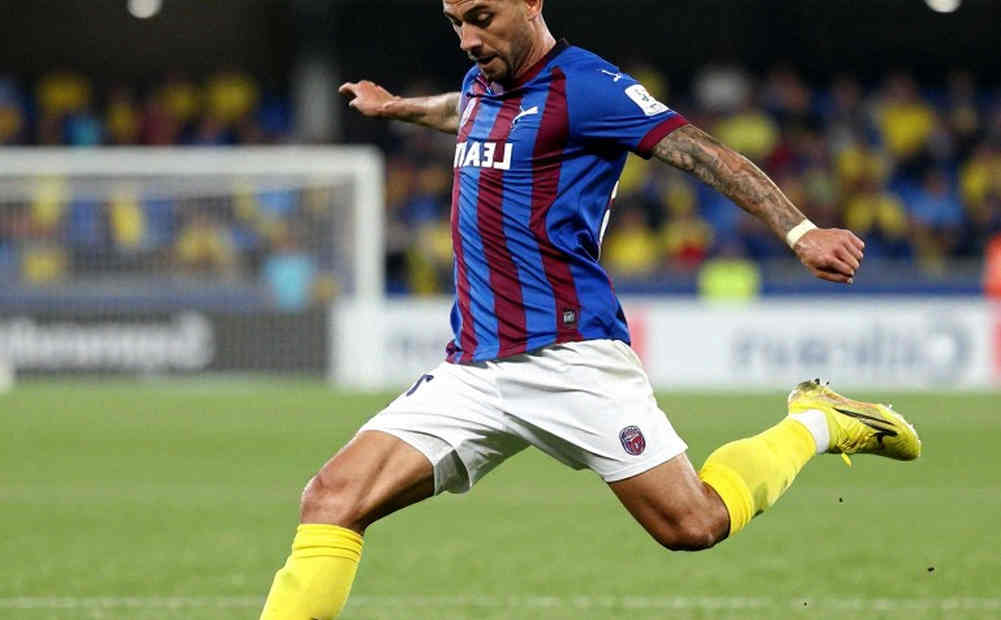
Kevin Diks stood over the ball at the penalty spot. The Borussia Mönchengladbach defender showed no hesitation — but he did not take the shot. Instead, he handed the ball to Ole Romeny. That penalty, converted by Romeny, was no longer just a personal statistic; it became a team statement. As the ball hit the net, the 75,000 fans at Jakarta's Gelora Bung Karno Stadium erupted.
The match ended 2-0. Indonesia's opening Group A win over Singapore carried little surprise — Singapore has historically been a mid-to-lower tier side in the region. The real story was not the victory but the penalty handover.
Notably, the post-match reporting contains no voice from the head coach or the federation. The entire narrative rests on the words of one player, Ole Romeny. That is both the strength and weakness of this report — strength because it comes from inside the incident; weakness because one event invites oversized conclusions.
The notebook opens before the noise does; Kirkby taught me that rhythm. When Trent Alexander-Arnold was rising from Liverpool's academy to the first team, I watched how trust in a player is built from internal relationships, not external expectations. Reading this Jakarta story brought those days back. The power centers inside a dressing room carry far more meaning than what is visible from outside.
Romeny's account is simple. Diks could have taken the penalty himself — there is no doubt about his quality. A defender in the Bundesliga showing such confidence in set pieces is itself a signal. Instead, he handed the ball to Romeny. Romeny's explanation: 'He could have taken it himself; we have many good penalty takers. He puts the team first, so I really appreciate him.'
That sentence is the core message of the report. But analytically, a gap remains: the 'why' of the handover is far less dramatic than the headline suggests. 'He puts the team first' is a character attribution, not the specific cause of the incident. Was the handover planned? Or was it an in-game decision? Romeny's words do not answer that. This is the report's biggest informational limitation.
Even so, the incident mirrors Indonesia's squad-building model. A nation that once relied on domestic league players now builds around Europe-based diaspora talents. Diks plays in Germany's Bundesliga; Jay Idzes is an Italy-based defender; Romeny himself developed through Dutch football. The advantage is clear — relatively low-cost access to players developed in superior leagues. But there is a hidden price: dependency becomes concentrated on very few individuals.
At Kirkby, I learned the beat is built from people, not headlines. The leadership picture emerging here repeatedly circles two names — Kevin Diks and Jay Idzes. Romeny says the whole squad is happy to have such leaders. That is a positive signal, but the question is: how sustainable is a leadership structure resting on just two people? When injury or loss of form arrives, will this structure hold? Leadership limited to two names in a squad of twenty-two suggests fragility.
The penalty-taker hierarchy is relevant here. Usually, a team has a designated taker, and that order is not broken. But Romeny's words suggest flexibility — with team interest placed above personal credit. Diks giving up the ball is an exercise of power: making someone else the hero instead of taking the role himself. That is genuinely a marker of a healthy dressing room.
In 2026, Anfield was empty, but ninety-nine points still echoed in every seat. That taught me that football's biggest stories are often written in silence rather than sound. This penalty handover is the same — a small moment, a large message.
But here is the contrarian angle. Gifting a penalty while leading 1-0 against a weaker opponent is a cheap gesture. The pressure is minimal — failure would not dramatically alter the match. Diks's real leadership test will come at 0-0 in a knockout tie or in a shootout. Would he give the ball away then, or take responsibility himself? Drawing conclusions about an entire dressing-room culture from one match, one moment, is over-analysis.
Another detail stopped me: the competition name. Multiple references label this as the 'FIFA ASEAN Cup 2026.' Yet this Southeast Asian national-team competition is organized by the ASEAN Football Federation (AFF) under the Asian Football Confederation (AFC) — not directly by FIFA. The reported date of September 25 also sits outside the competition's historical November-December window. These inconsistencies raise questions about the source's reliability. A naming error does not mean the event is false — but it means all other facts should be verified through official federation channels.
The scoreline itself calls for caution. Of the two goals, one came from a penalty — meaning only one came from open play. No xG data, no shot counts, no possession figures are available. The win could reflect a controlled performance or a labored one. What the report lacks cannot support decisive competitive conclusions.
Those who read this as proof of Indonesia's tournament readiness will be mistaken. This report is actually a window into a new reality — a Europe-dependent squad model led by two diaspora players. That model is now inspiring neighboring nations to follow the same path. Over a three-to-five-year horizon, Indonesia's relative advantage may erode.
Indonesia's football market is among the largest in Asia. When a Bundesliga defender projects positive leadership in the region's most-watched fixture, commercial interest naturally rises. Federations, broadcasters and sponsors all benefit. But it is worth remembering that this benefit rests on a single incident.
The question remains — what will we see in the next match? Will Diks make the same choice again? Will Idzes prove his leadership on a bigger stage? If Romeny's goal drought continues, will the penalty come his way again? This team's true character will emerge under pressure, at 0-0, against stronger opposition. That is when Diks's leadership story — and Indonesia's diaspora-dependent model — will face its real examination.

Related Players
Recommended
Empty Input, Wrong Domain: Why This Article Cannot Be Written Without Fabricating2026-10-07
Borja's Message on the Azteca's 110th Birthday: The Real Calculation Behind Almeyda's Words2026-10-10
Football's Ledger: Why the Kane, Ronaldo and Messi Narratives Mask the Real Crisis2026-10-08
De Nigris in the Nightclub Crowd: When Football Data Mistakes a Celebrity Controversy for Its Own2026-09-30
The Story That Landed on the Football Desk: 'Heated Rivalry', the Breaking Body, and the Lesson Inside a Wrong Tag2026-09-27
Pakistan's Meat Export Reform: FMD, Certification and Traceability as Three Pillars2026-10-07